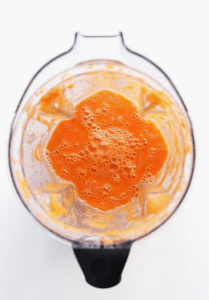
Carrot juice has a particularly high content of β-carotene, a source of vitamin A, but it is also high in B complex vitamins like folate, and many minerals including calcium, copper, magnesium, potassium, phosphorus, and iron. A pound (454 g) of carrots will yield about a cup of juice (about 236 ml)[citation needed], which is a low yield compared to fruits like apples and oranges. However, carrot pulp is very tough; the main difficulty in juicing carrots is in separating the pulp from the juice.
Like many products high in beta-carotene, it may cause temporary carotenoderma, a benign skin condition resulting in an orange-yellow hue to the skin.[1] Drinking more than 3 cups of carrot juice in a 24-hour period, over a prolonged period of time may be enough to cause the condition.[2]
Carrot juice has a uniquely sweet flavour of concentrated carrots. Unlike many juices, it is opaque. It is often consumed as a health drink. Carrots have been made into soups and juices for hundreds of years. In America carrot juice was one of the first colorants used to make cheese a darker color. https://en.wikipedia.org/wiki/Carrot_juice.
Hope you enjoyed this “Daily Wellthy” Snippet.







 Hello, There is a silent epidemic of blindness which is gradually sweeping over aging Americans. This common blindness is being caused by macular degeneration. Macular degeneration is now the #1 most common cause of blindness in adults. In fact, one in ten folks over age 60 has already unknowingly started the changes of early macular degeneration. Read the article written by Dr.




 Functional Medicine University
Recent Comments